

Top Fiberglass Door Manufacturer Henan Enbuess Advances Composite Material Solutions
Fire-resistant Door
ANYANG, HENAN, CHINA, October 14, 2026 /EINPresswire.com/ --
As demand grows for energy-efficient buildings, durable architectural components, and lightweight industrial materials, composite technology is attracting greater attention across construction and renewable energy markets. Henan Enbuess Composite Materials Co., Ltd. is part of this evolving sector, with capabilities spanning composite material research and development, profile engineering, manufacturing, and customized applications. Its product portfolio includes fiberglass-reinforced door and window profiles, Fiberglass Windows, and FRP Solar Components, reflecting the growing role of glass-fiber composites in building envelopes and solar energy infrastructure.
For architects, contractors, fabricators, and project developers, choosing a fiberglass door manufacturer involves more than comparing appearance or purchase price. Material composition, structural design, thermal performance, weather resistance, dimensional consistency, and long-term maintenance all influence a product's suitability. Composite profiles can provide an alternative to conventional materials in applications where designers seek a combination of strength, reduced weight, insulation potential, and resistance to environmental exposure. Henan Enbuess Composite Materials Co., Ltd. operates in this wider market, connecting composite manufacturing capabilities with architectural and industrial applications.
Composite Materials Reshape Door and Window Design
Doors and windows form a critical part of a building's exterior envelope. They influence thermal performance, weather protection, acoustic comfort, appearance, and everyday usability. Traditional materials such as aluminum, steel, timber, and PVC each offer distinct advantages, but project requirements continue to encourage exploration of alternative materials and hybrid designs.
Glass-fiber-reinforced composites combine reinforcing fibers with a polymer matrix to create profiles with application-specific properties. In fiberglass-reinforced polyurethane systems, glass fibers contribute mechanical strength while the polyurethane matrix offers comparatively low thermal conductivity. The actual performance of a finished door or window depends on its profile geometry, fiber content, manufacturing quality, seals, glazing, hardware, and installation.
Henan Enbuess Composite Materials Co., Ltd. focuses on composite profile engineering and related products, according to its published company information. The company describes capabilities in tooling, pultrusion, profile processing, and customized composite solutions. These manufacturing processes are relevant to architectural components because consistent profile dimensions and controlled production help support assembly accuracy and repeatable product performance.
The fiberglass door market includes a range of product constructions, from complete door systems to composite frames and profiles used by downstream fabricators. Buyers should distinguish between these offerings when requesting quotations. A manufacturer of composite profiles may supply the structural material for a finished door system, while other suppliers may provide the complete door, including panels, glazing, locks, hinges, seals, and installation accessories. Understanding the scope of supply helps avoid mismatches between the product purchased and the finished assembly required for a project.
Fiberglass Windows and Integrated Building Performance
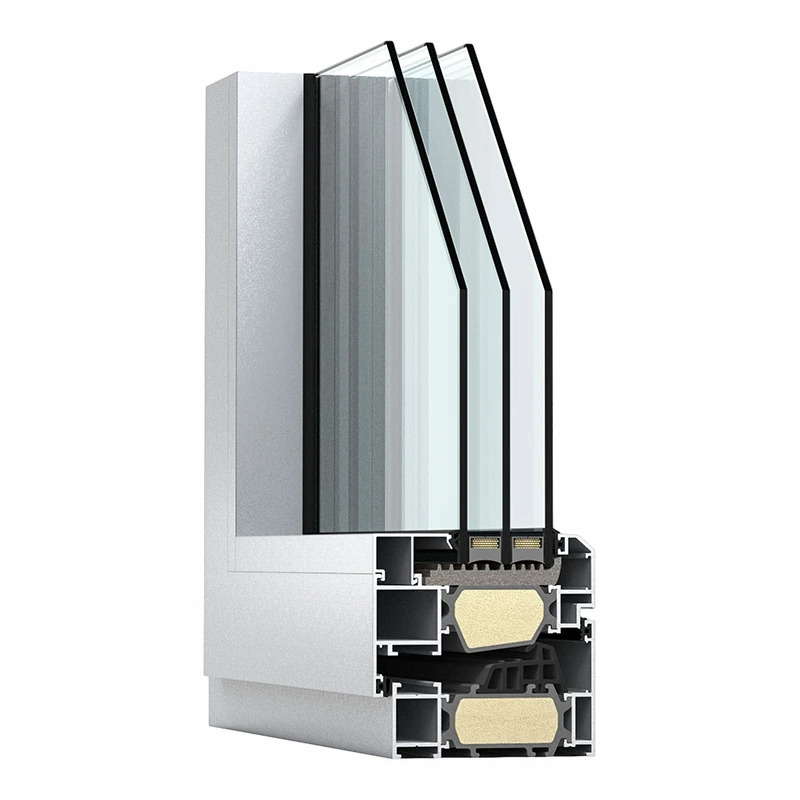
Windows are an important application for glass-fiber composite profiles. Their performance depends on the interaction between the frame, glazing, weather seals, drainage paths, hardware, and installation details. A profile with favorable material properties cannot independently guarantee the performance of the complete window, but it can provide a foundation for a well-engineered system.
Fiberglass Windows are relevant to residential buildings, commercial developments, renovation projects, and specialized energy-efficient construction. In these applications, composite profiles can help designers balance structural requirements with thermal insulation and resistance to environmental exposure. Their dimensional stability and relatively low thermal conductivity may also be useful when developing systems intended to reduce heat transfer through the frame.
Henan Enbuess Composite Materials Co., Ltd. identifies glass-fiber-reinforced polyurethane door and window profiles as a key business area. The company's published portfolio includes multiple architectural profile configurations and associated composite products. For window manufacturers and building contractors, such products can support projects that require customized frame geometry or integration into broader building-envelope systems.
When assessing Fiberglass Windows, purchasers should look beyond the profile material and review the performance of the complete unit. Relevant criteria include air leakage, water tightness, wind-load resistance, thermal transmittance, sound insulation, operating force, and durability under repeated use. These characteristics depend on the entire window assembly and should be confirmed through suitable test reports or certification documents for the exact product configuration.
Installation is equally important. Incorrect frame positioning, inadequate sealing, poor drainage detailing, or unsuitable fixings can undermine the performance of even a carefully designed window. Project teams should therefore coordinate the profile specification with the glazing system, building structure, installation method, and local building requirements.
The Role of Pultrusion in Composite Manufacturing
Pultrusion is a continuous manufacturing process commonly used to produce fiber-reinforced profiles with a consistent cross-section. Reinforcing fibers are guided through a resin system and a heated forming die, where the material is shaped and cured before being cut to the required length. The process can support repeatable production of profiles used in construction, electrical insulation, transportation, and industrial applications.
For architectural components, the profile design must account for more than material strength. Wall thickness, internal geometry, reinforcement placement, connection details, fastener locations, and surface finishing can all influence the finished product. Tooling quality and production control help determine whether profiles can be assembled reliably into doors, windows, and other structures.
Henan Enbuess Composite Materials Co., Ltd. presents its manufacturing capabilities as extending across material processing, mold development, pultrusion, and further profile processing. The company's wider composite portfolio also includes customized profiles and components for industrial applications. This manufacturing model can be relevant to buyers seeking profiles tailored to a specific design rather than relying entirely on standard sections.
Customization generally begins with a clear technical brief. Customers may provide drawings, samples, dimensional requirements, load expectations, environmental conditions, or details about the intended assembly. The supplier can then evaluate the proposed cross-section and manufacturing approach. Before full-scale production, prototype review and dimensional verification can help identify issues related to fit, connection strength, finish, or installation.
A disciplined manufacturing process also requires appropriate quality controls. These may include raw-material inspection, dimensional checks, process monitoring, surface inspection, and verification of finished-profile properties. Buyers should ask which checks are performed and whether the supplier can provide product-specific documentation. The relevant quality measures will vary with the application and the performance requirements of the final component.
FRP Solar Components Support Renewable Energy Infrastructure
Beyond building doors and windows, fiber-reinforced polymer materials are used in applications where corrosion resistance, weight, and long-term environmental exposure are important considerations. Solar energy infrastructure is one such market. Components used around photovoltaic modules and supporting structures must remain suitable for outdoor conditions while meeting the mechanical and installation requirements of the system.
FRP Solar Components can include composite profiles and other engineered parts used in solar-related assemblies. Depending on the product design, composite materials may offer advantages where conventional materials face corrosion risks or where reduced component weight is useful. However, suitability depends on the exact component, its load-bearing role, connection method, exposure conditions, and applicable project standards.
Henan Enbuess Composite Materials Co., Ltd. identifies solar-related composite products among its business areas. Its published portfolio includes photovoltaic framing and support-related solutions, alongside broader FRP profiles and custom composite components. These categories connect the company's profile manufacturing capabilities with the renewable energy sector.
For solar project developers, component selection must be based on the requirements of the full photovoltaic installation. Relevant considerations include wind and mechanical loads, temperature variation, ultraviolet exposure, moisture, fastening systems, electrical safety, compatibility with neighboring materials, and maintenance access. A component should be evaluated against its intended function rather than assuming that all FRP materials offer identical properties.
The term FRP covers a broad family of fiber-reinforced polymer products. Different fiber types, resin systems, reinforcement arrangements, and manufacturing methods can produce substantially different mechanical and environmental characteristics. Buyers should therefore request specifications for the exact FRP Solar Components being considered, including relevant test evidence and installation instructions.
The relationship between architectural profiles and solar components also demonstrates the versatility of composite manufacturing. While windows and doors prioritize dimensional accuracy, thermal performance, weather sealing, and appearance, solar applications may place greater emphasis on structural loading, corrosion resistance, and outdoor durability. The ability to develop different profile geometries can support varied requirements, provided that each product is designed and tested for its intended use.
Applications Beyond Doors and Windows
Composite profiles are used across multiple industries because they can be tailored to specific combinations of strength, weight, insulation, and resistance to environmental conditions. In construction, FRP products may be used for cable trays, guardrails, structural profiles, insulating components, and other specialized applications. In transportation, composite parts can help meet weight and design requirements. In energy and industrial settings, they may be selected for components exposed to moisture, chemicals, or demanding service environments.
Henan Enbuess Composite Materials Co., Ltd. describes a broader product and application range beyond architectural door and window profiles. Its published company information references industrial FRP profiles, photovoltaic products, and customized composite components for sectors including rail transit, automotive applications, and wind energy. The actual capabilities and specifications available for any individual project should be confirmed with the company.
For buyers, this breadth can be relevant when a project requires more than one type of composite profile or when a design needs to be adapted to unusual operating conditions. Nevertheless, products intended for different applications should not be treated as interchangeable. A profile developed for a window frame may not meet the structural requirements of an industrial support, and a solar component may require different validation from an architectural product.
Engineering collaboration is therefore important during product development. By clarifying the expected loads, operating environment, installation process, dimensional tolerances, and relevant standards, customers and manufacturers can define a more suitable product specification. This process can also establish which performance tests are necessary before the component is approved for use.
What Buyers Should Evaluate When Choosing a Fiberglass Door Manufacturer
Choosing a fiberglass door manufacturer requires a structured assessment of product suitability, production capability, technical documentation, and after-sales support. The first step is to define whether the project needs a complete door system, a window or door frame, a profile for downstream fabrication, or a custom composite component. These are different supply requirements and should be specified clearly in a request for quotation.
The second step is to review the material and performance requirements. Buyers should consider thermal insulation, structural strength, dimensional tolerances, surface finish, moisture exposure, ultraviolet resistance, and expected service conditions. Where energy efficiency, fire performance, or acoustic insulation is important, the project team should request relevant test results for the finished assembly and confirm that they apply to the proposed configuration.
The third step is to evaluate manufacturing and delivery arrangements. Production capacity, tooling availability, minimum order quantities, lead times, packaging, and export documentation can affect the practical feasibility of a project. For customized profiles, buyers should also establish how design revisions, prototype approval, and tooling ownership are handled.
Quality assurance and ongoing support are equally important. Clear technical drawings, installation instructions, traceability information, and warranty terms can help project teams manage procurement and maintenance. For international buyers, it is also necessary to confirm compliance with applicable destination-market requirements rather than assuming that a product accepted in one market automatically meets another market's standards.
For projects involving Fiberglass Windows and FRP Solar Components, the procurement process should include separate technical checks for each application. Window assemblies need verification of building-envelope performance, while solar-related components must satisfy the requirements of their specific structural and environmental role. A supplier's broader composite expertise can be useful, but product approval should remain based on evidence for the individual component.
Looking Ahead for Composite Building Materials
The development of composite profiles reflects a wider effort to improve material efficiency and adapt building components to increasingly specific performance requirements. In architecture, the combination of structural reinforcement and polymer matrices creates opportunities for window and door systems designed around thermal performance, durability, and appearance. In renewable energy, engineered FRP components may offer useful alternatives for selected applications where corrosion resistance and weight are important.
Henan Enbuess Composite Materials Co., Ltd. participates in this market through its stated focus on composite profile manufacturing, architectural systems, solar-related products, and customized industrial applications. Its Fiberglass Windows and FRP Solar Components categories reflect two distinct areas in which composite materials can contribute to building and energy infrastructure.
For developers, fabricators, and distributors, the most effective procurement decisions will depend on matching material properties to the demands of each application. Reviewing technical specifications, test documentation, manufacturing controls, and installation requirements can help ensure that selected products are appropriate for their intended use. As composite technology continues to develop, cooperation between material manufacturers, system designers, and project teams will remain important to translating material potential into dependable finished products.
About Henan Enbuess Composite Materials Co., Ltd.
Henan Enbuess Composite Materials Co., Ltd. is a composite materials enterprise associated with the ENBUESS brand and the wider Fourtone Group manufacturing platform, according to its published company profile. The company describes capabilities spanning composite material research and development, structural and profile design, mold development, pultrusion, further processing, and customized technical services. Its stated product range includes fiberglass-reinforced polyurethane door and window profiles, Fiberglass Windows, photovoltaic frames and supports, FRP Solar Components, industrial FRP profiles, corrosion-resistant products, and custom composite components. These products are intended for applications across construction, solar energy, transportation, and industrial markets. The company's website is www.enbuessfrp.com. Prospective customers should contact the company directly to confirm the current product portfolio, technical specifications, certifications, customization options, delivery arrangements, and after-sales support before placing an order.
Address: No.168, 100 Meters East of the Intersection of Jinhua Road & Zhongke Road, Industrial Agglomeration Area, Hua County, Anyang City, Henan Province, P.R. China
Official Website: https://www.enbuessfrp.com/
Leila Yang
Henan Enbuess Composite Materials Co., Ltd.
leila.salesdir@enbuess.com
Legal Disclaimer:
EIN Presswire provides this news content "as is" without warranty of any kind. We do not accept any responsibility or liability for the accuracy, content, images, videos, licenses, completeness, legality, or reliability of the information contained in this article. If you have any complaints or copyright issues related to this article, kindly contact the author above.
